How Awareness Changes Your Relationship With the Past

The past has a powerful presence in our lives.
Even though it is no longer happening, it continues to influence how we think, feel, and respond. Memories shape our beliefs, guide our decisions, and sometimes hold us in patterns we don’t fully understand.
You may find yourself replaying old conversations, revisiting moments of regret, or holding onto experiences that still carry emotional weight. At times, the past can feel as if it is still alive within you.
Mindfulness offers a way to shift this relationship.
It does not erase the past or change what happened. Instead, it changes how you relate to it—transforming it from something that controls you into something you can observe, understand, and gradually release.
The Nature of the Past
The past exists in two forms:
As events that have already happened
As memories that exist in the present moment
While events are fixed, memories are not.
Each time you recall the past, you experience it through your current thoughts, emotions, and perspective. This means your relationship with the past is alive and changeable.
Mindfulness helps you recognize that what you are experiencing is not the past itself, but your present-moment connection to it.
When the Past Feels Present
Sometimes, past experiences feel as though they are happening again.
You may notice:
Strong emotional reactions to memories
Physical sensations linked to past events
Thoughts that repeat familiar patterns
This happens because the mind does not always distinguish clearly between past and present.
When awareness is low, memories can pull you back into old emotional states.
Mindfulness creates a gentle distance.
It allows you to see the memory as something arising in the present, rather than something you are trapped inside.
Observing Memories Without Getting Lost

credit - Forbes
One of the key shifts mindfulness offers is the ability to observe memories without becoming fully absorbed in them.
Instead of:
Reliving the moment
Reacting emotionally as if it is happening now
You begin to:
Notice the memory as a mental event
Observe the thoughts and feelings that arise
Stay grounded in the present moment
This does not remove the memory, but it changes your experience of it.
You become the observer, rather than the participant.
Letting Go of Repetitive Thinking
The mind often returns to the past in an attempt to understand or resolve it.
This can lead to:
Overthinking
Regret
“What if” scenarios
Self-criticism
While some reflection can be helpful, repetitive thinking often keeps you stuck.
Mindfulness helps you recognize when this pattern is happening.
When you notice yourself looping through the same thoughts:
Gently bring your attention back to your breath
Focus on your surroundings
Acknowledge the thought without following it
This interrupts the cycle and creates space.
Releasing the Weight of Regret
Regret is one of the most common ways the past affects us.
You may think:
“I should have done something differently.”
“I made a mistake.”
These thoughts can carry emotional weight.
Mindfulness encourages a different approach.
Instead of resisting regret or getting lost in it, you can:
Acknowledge the feeling
Recognize it as part of your experience
Allow it to soften over time
This does not mean ignoring responsibility—it means relating to it with awareness instead of self-judgment.
Understanding Without Judgment
The past often becomes difficult when it is viewed through a lens of judgment.
You may judge:
Your past actions
Your past decisions
Your past self
Mindfulness invites understanding instead of judgment.
You can begin to see:
The circumstances you were in
The knowledge you had at the time
The emotions you were experiencing
This perspective creates compassion.
Understanding replaces harshness, allowing healing to begin.
The Role of Acceptance
Acceptance is a central part of changing your relationship with the past.

credit - Medium
This does not mean approving of everything that happened.
It means recognizing that:
The past cannot be changed
Holding onto resistance creates suffering
Letting go creates space for peace
Mindfulness helps you gradually accept what is.
With acceptance, the emotional grip of the past begins to loosen.
Returning to the Present Moment
The most powerful way to shift your relationship with the past is to return to the present.
The present moment is where life is happening now.
When attention is anchored here:
Memories lose their intensity
Thoughts become less overwhelming
Awareness becomes clearer
Simple practices like focusing on the breath, noticing your body, or observing your surroundings can help you return.
Each time you come back to the present, you strengthen your ability to stay grounded.
Learning From the Past Without Living in It
The past holds valuable lessons.
Mindfulness allows you to learn from these experiences without becoming stuck in them.
You can reflect on:
What you have learned
How you have grown
What you might do differently
This reflection is intentional and balanced.
It supports growth without creating emotional burden.
Releasing Emotional Residue
Even when the mind moves on, emotions from the past can remain in the body.
You may feel:
Tension
Heaviness
Subtle discomfort
Mindfulness helps you process these sensations.
By bringing awareness to the body:
Notice where the feeling is present
Allow it without resistance
Breathe gently
Over time, these sensations can soften and release.
Rewriting Your Inner Narrative
The way you think about your past shapes how you experience it.
Mindfulness helps you notice your inner narrative.
You might discover patterns such as:
Blaming yourself
Focusing only on negative aspects
Repeating limiting beliefs
With awareness, you can begin to shift this narrative.
You can include:
Acknowledgment of growth
Recognition of resilience
A more balanced perspective
This does not change the past, but it changes how it lives within you.
Freedom Through Awareness
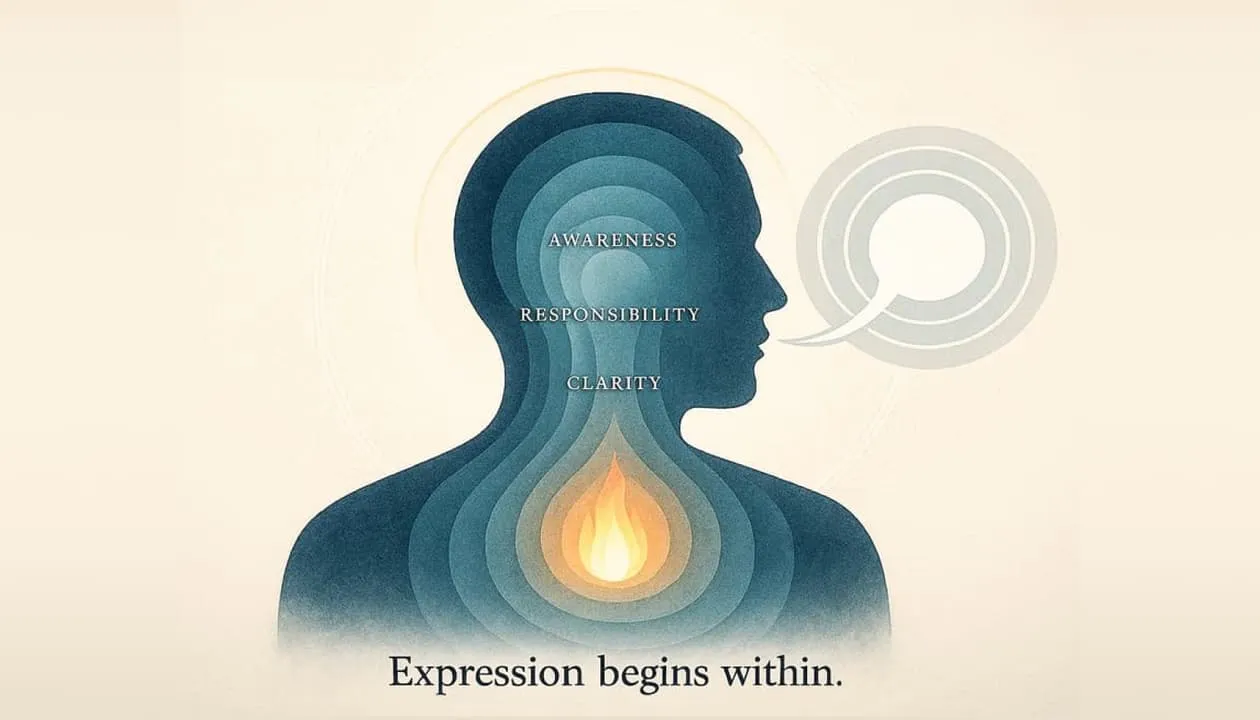
When the past is unexamined, it can feel heavy and controlling.
credit - Acharya Prashant
When it is observed with awareness, it becomes lighter.
You gain the freedom to:
Experience memories without being overwhelmed
Let go of unnecessary emotional weight
Stay connected to the present
This freedom comes not from forgetting, but from understanding.
A Gentle and Ongoing Process
Changing your relationship with the past is not something that happens instantly.
It is a gradual process.
Some memories may feel easy to release, while others may take time.
Mindfulness encourages patience.
Each moment of awareness is a step toward greater clarity and ease.
Closing Reflection
The past is a part of your life, but it does not have to define your present.
Through mindfulness, you learn to observe memories without being controlled by them, to understand experiences without harsh judgment, and to release what no longer serves you.
In this shift, the past becomes less of a burden and more of a teacher.
And as your relationship with the past changes, you begin to experience the present with greater freedom, clarity, and peace.
Stay Inspired
Get a daily dose of positivity delivered to your inbox.